Catalogue
Active Balancers
A standalone balancer moves charge between cells in a pack that already has protection. It is not a BMS and does not replace one — it fixes drift that a passive balancer cannot keep up with.
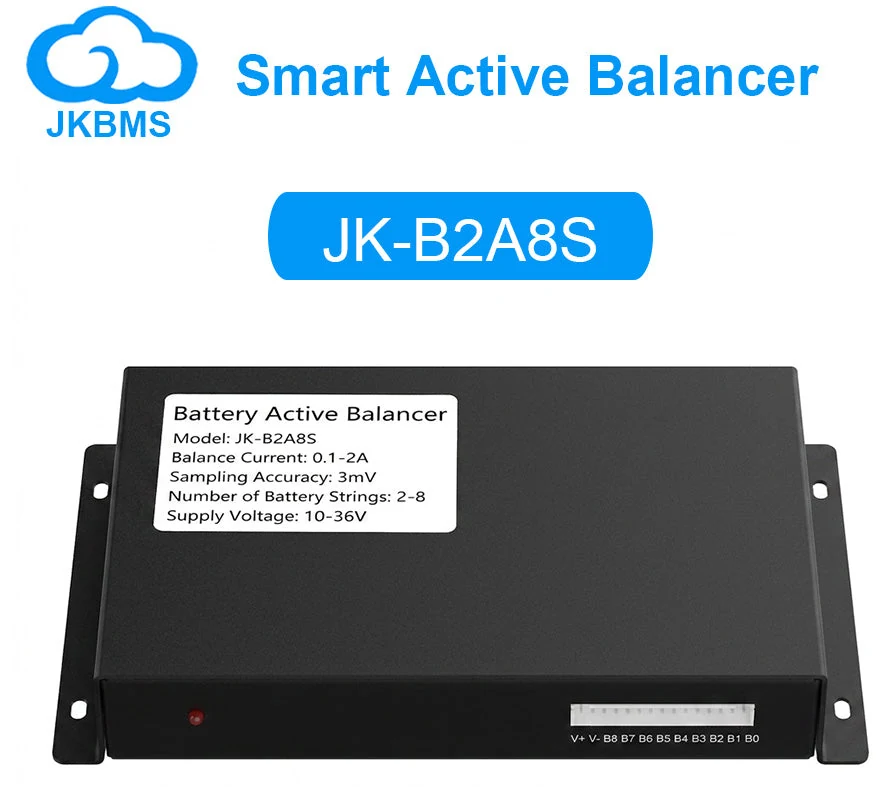
JK-B2A8S
- Series
- 2S–8S · Li-ion / LiFePO4 / LTO / Lead-acid
- Balance
- 2 A
- Protocols
- BLE, RS485 (optional), CAN (optional)
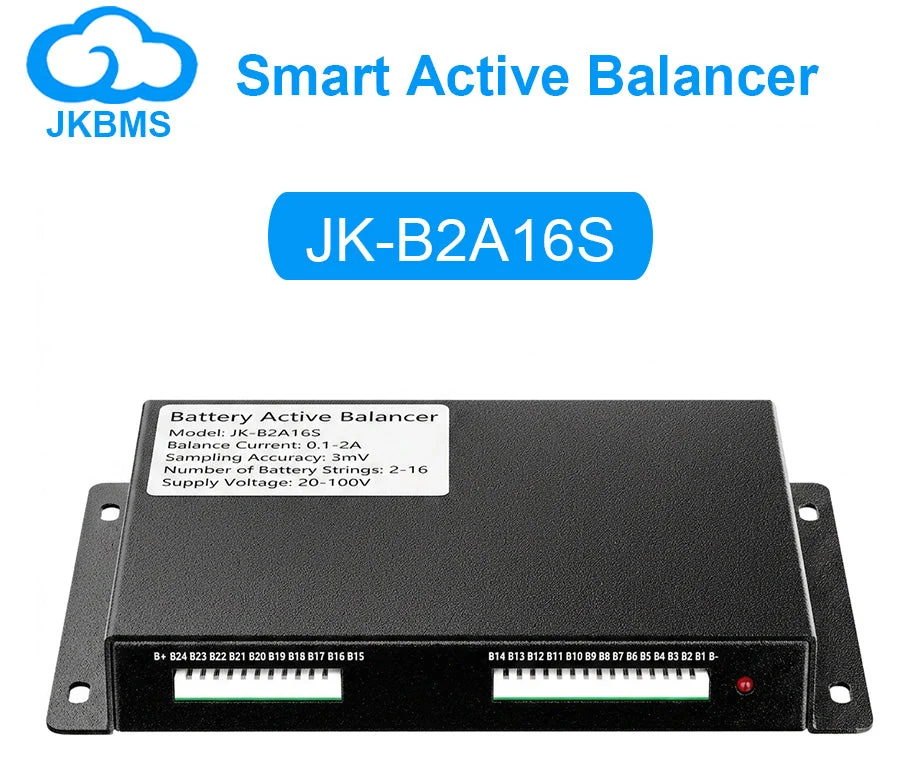
JK-B2A16S
- Series
- 2S–16S · Li-ion / LiFePO4 / LTO / Lead-acid
- Balance
- 2 A
- Protocols
- BLE, RS485 (optional), CAN (optional)
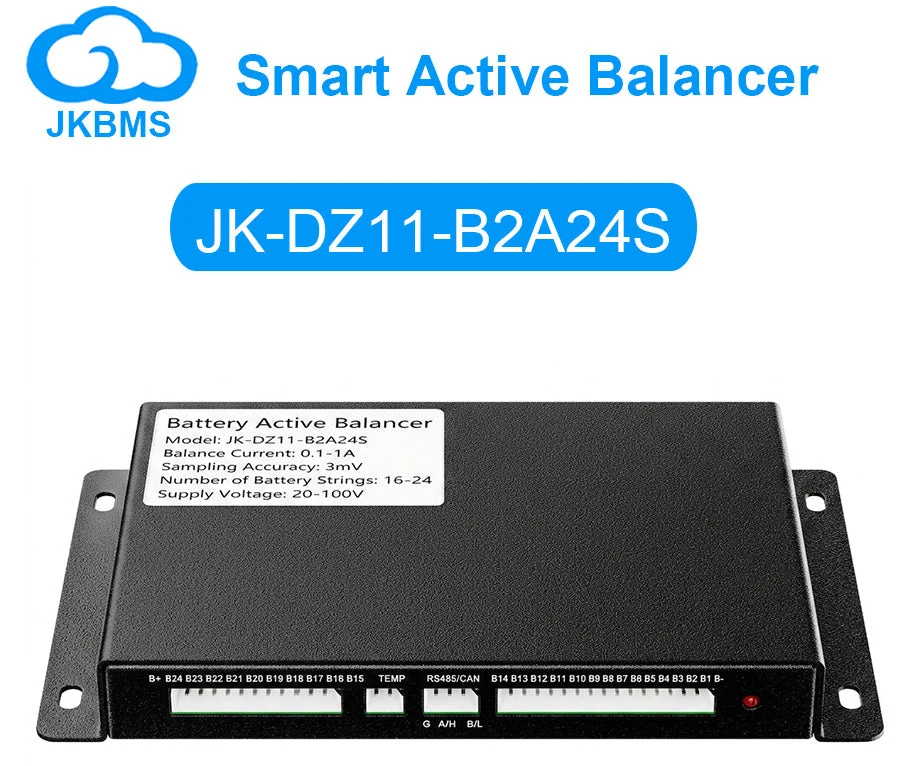
JK-DZ11B2A24S
- Series
- 2S–24S · Li-ion / LiFePO4 / LTO / Lead-acid
- Balance
- 2 A
- Protocols
- BLE, RS485, CAN (optional)
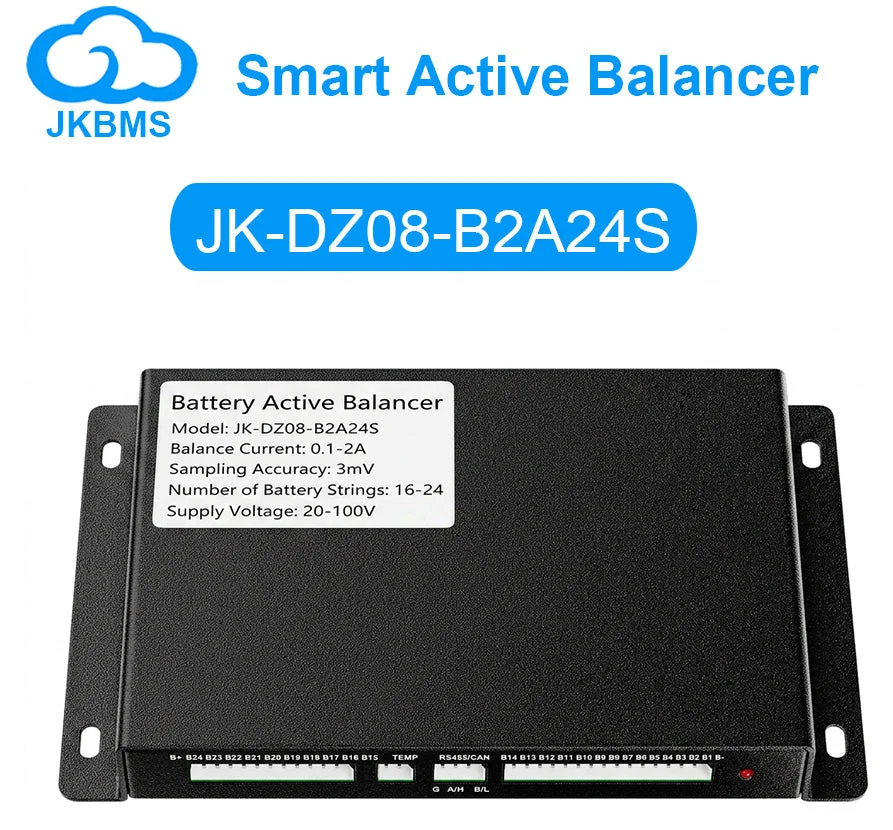
JK-DZ08B2A24S
- Series
- 2S–24S · Li-ion / LiFePO4 / LTO / Lead-acid
- Balance
- 2 A
- Protocols
- BLE, CAN, RS485 (optional)
What decides a active balancer
3 parameters, in the order they eliminate options. Each one can rule out a model on its own — which is why the order matters.
1 · Cells in series
The balancer has to cover the pack it is wired to. A unit built for 16S will not work on a 24S pack, and using one on fewer cells than it expects leaves channels unused.
2 · Balance current
Higher current corrects drift faster but produces more heat. For a pack that is already balanced and only drifts slowly, a lower current is often the better choice.
3 · Whether the pack already has a BMS
A balancer works alongside protection, not instead of it. A pack with no BMS needs one before it needs a balancer.
Stock ships from Poland
Delivery is included in the price for 25 countries, and nothing is added at checkout. Ten units in a mixed order move onto a different cost tier.
Lead times are not published yet
Delivery times depend on the carrier contract, which is still being quoted. We would rather leave the number out than publish one we cannot hold — an unfulfillable delivery promise causes more cancellations than a missing estimate.